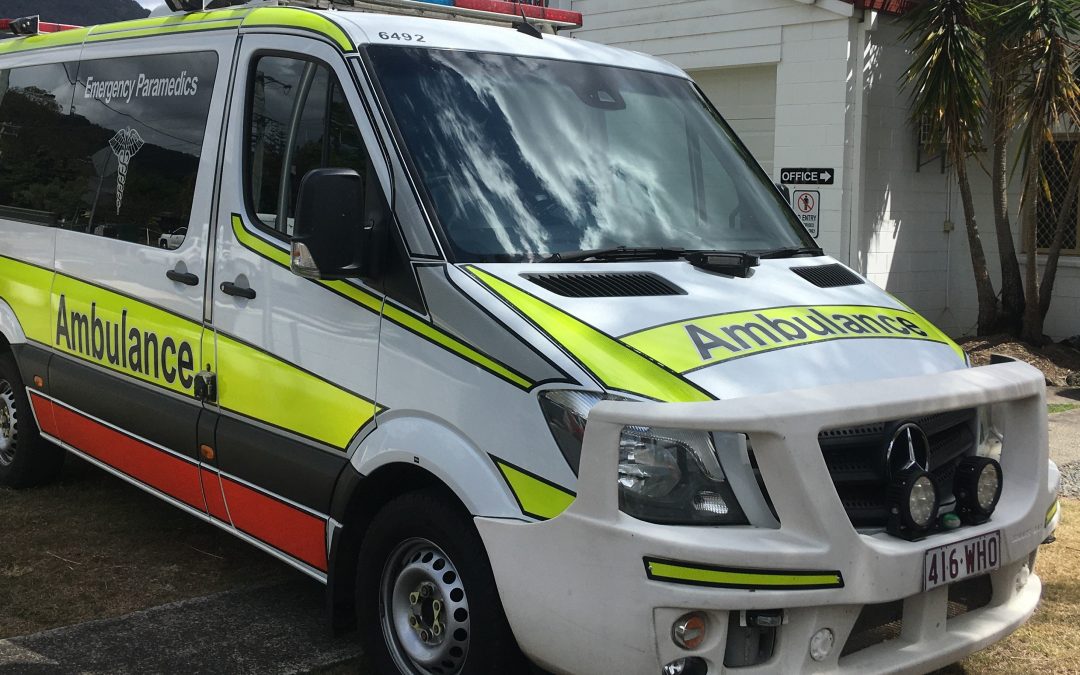
Floods, bushfires and now the COVID-19 pandemic.
Australia has faced ongoing emergency situations and it’s impossible to know when the next one might be.
Medical professionals say that’s why online access to your health information including medicine documents, a summary of your medical history and recent pathology and diagnostic imaging reports are so important.
Dr Andrew Rochford has said having critical information in your My Health Record can help save your life.
“Having that important health care information in one space that can be accessed no matter where you are by the people who need to access it. Most. It means that there is a safety net – a streamlining of how your care can occur because you never know in those emergency circumstances whether you’ll need to be able to be provided with medications, whether you’ll need to have medical care at a place that’s not the usual place where you have your care. And being able to have that information accessed in those emergency situations means that there’s going to be better outcomes for you and also for those that you care for”.
My Health Record can be accessed by emergency departments if you are rushed to hospital and the doctors need to know of any health issues, allergies or medicine you may be taking if you can’t speak.
Also, you can use the information in your My Health Record to prove you have a specified health condition that may make you eligible for an earlier COVID-19 vaccination and to display the date of that vaccine when you have had one. 
Dr Rochford believes the old way of keeping medical records should be confined to the past.
“And I think for a very long time we became comfortable with the idea , you know “if it aint broke don’t fix it” but you know medical information being handwritten on paper records that sit in manila folders at the bottom of filing cabinets all over the country isn’t helpful it makes it hugely challenging, not only for the patient to remember everything that occurred, what treatments were given? What surgeries you might have had? What complications might have occured? The responsibility there comes down to how can we access and hunt down all that very valuable information. That’s no longer something that needs to occur because that information now can all exist in one place and the reliance isn’t on the patient to make sure they know everything – they’ve remembered everything. It actually comes down to that record being updated and health care providers being able to make the best decision based on that valuable information”.
Australians are increasingly looking at the information in their My Health Record. Since the beginning of 2021, there has been a 57 per cent increase in consumer viewing compared with the same time last year. They’re using the mobile apps and their computers via the MyGov login.
The recently introduced consolidated immunisation view in My Health Record has become one of the top 10 items Australians are looking at.
Dr Rochford has said “ “All of the immunisations recorded and uploaded by your GP and all of the immunisations in the Australian Immunisation Registered are visible on one page”.
In the 12 months to February 2021, there has been a 139 per cent increase in the number of documents uploaded by GPs, which have been viewed by other healthcare providers.
Australians are now choosing to have a record where previously they didn’t want one? Since February 2019, more than 70,000 people now have a record after either opting out or cancelling their previous record. This is increasing at a rate of four per cent each month.
In the 12 months to February 2021, there has been a 46 per cent increase in the number of documents in all My Health Records.
Nearly 23 million Australians have a My Health Record and more than 20 million records have some form of data in them. This includes 122 million clinical documents uploaded by hospitals, pathologists and radiologists (which has more than doubled in the last year), and 213 million medicine documents (up from 112 million in Feb 2020) including prescriptions uploaded by pharmacies and GPs.
There are also nearly six million shared health summaries (up from four million a year ago), which provide a consolidated view of your medical history uploaded by your doctor and can include your medical conditions, medicines, allergies and adverse reactions and immunisations. You can find shared health summaries by going to the ‘Documents’ dropdown list in My Health Record and selecting ‘Clinical Records’. These summaries are also easy to find using the mobile apps.
Use by hospitals has seen the volume of discharge summaries grow by 40 per cent in the last year (from six million to 10 million).
Patients or their authorised representatives have full control over what appears in their record and who can access their record, they can restrict access to the whole record, particular documents or even delete particular documents if they prefer they were not there.
The My Health Record system is built and tested to very high Federal Government standards to protect the confidentiality, integrity, and availability of the health records so that Australians can receive the highest quality digital health services in a safe and secure way.